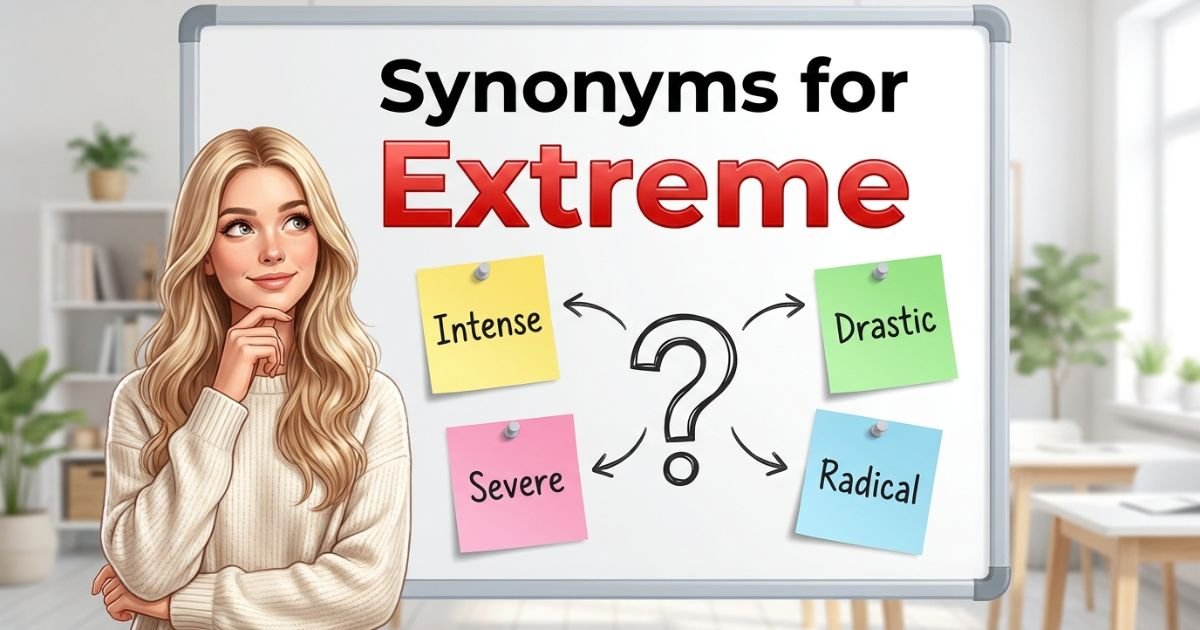
Is “extreme” showing up too often in your writing? It’s a useful word, but it can feel flat when you use it again and again. The good news is that English offers dozens of stronger, more precise alternatives.
Common synonyms for extreme include intense, severe, drastic, radical, excessive, fierce, acute, harsh, and utmost. The right choice depends on what you want to describe: a feeling, a weather event, a belief, a sport, or a decision. This guide gives you 50 synonyms, each with a simple meaning, an example sentence, and advice on when to use it.
Quick Answer
Synonyms for extreme: intense, severe, drastic, radical, excessive, fierce, acute, harsh, utmost, supreme.
Fast tip: Use severe for serious problems, intense for strong feelings or heat, radical for big changes, and excessive when something goes past a healthy limit.
What Does “Extreme” Mean?
“Extreme” describes something at the farthest point of a scale. It can mean very strong, very serious, very unusual, or far beyond what is normal.
It works in several roles:
- Adjective: extreme heat, extreme measures, extreme opinions
- Noun: going to extremes, at the other extreme
- Informal use: extreme sports, extreme makeover
The word often carries a hint of danger, risk, or intensity. That is why choosing a more specific synonym usually makes your writing clearer.
50 Synonyms for Extreme (With Meanings and Examples)
Synonyms for Strong Intensity
1. Intense
- Meaning: Very strong or powerful.
- Example: She felt intense pressure before the exam.
- Best use: Emotions, heat, light, focus, competition.
2. Fierce
- Meaning: Wild, aggressive, or very strong.
- Example: The team faced fierce competition in the final.
- Best use: Battles, storms, rivalry, loyalty.
3. Acute
- Meaning: Sharp, serious, and sudden.
- Example: He felt acute pain in his knee.
- Best use: Pain, shortages, medical or technical contexts.
4. Powerful
- Meaning: Having great strength or force.
- Example: A powerful wind knocked down several trees.
- Best use: Forces, speeches, engines, emotions.
5. Vehement
- Meaning: Showing strong, passionate feeling.
- Example: He gave a vehement denial of the rumor.
- Best use: Arguments, protests, objections.
6. Violent
- Meaning: Using or showing great force, often destructive.
- Example: A violent storm hit the coast overnight.
- Best use: Weather, conflict, sudden reactions.
7. Heavy
- Meaning: Great in amount or force.
- Example: Heavy rain flooded the streets.
- Best use: Rain, traffic, losses, workloads.
8. Strong
- Meaning: Having great force or effect.
- Example: There was a strong smell of smoke.
- Best use: Everyday descriptions of smells, opinions, winds.
9. Passionate
- Meaning: Showing deep, strong emotion.
- Example: She made a passionate plea for change.
- Best use: Speeches, beliefs, relationships, hobbies.
10. Burning
- Meaning: Very strong and intense, often like a desire.
- Example: He had a burning desire to succeed.
- Best use: Ambition, curiosity, determination.
Synonyms for Seriousness and Danger
11. Severe
- Meaning: Very serious or harsh.
- Example: The region suffered a severe drought.
- Best use: Weather, illness, damage, penalties.
12. Grave
- Meaning: Very serious and worrying.
- Example: The doctors warned of a grave risk.
- Best use: Formal writing about danger or consequences.
13. Critical
- Meaning: At a dangerous or decisive point.
- Example: The patient is in critical condition.
- Best use: Medical, emergency, or high-stakes situations.
14. Dire
- Meaning: Extremely serious or urgent.
- Example: The town was in dire need of clean water.
- Best use: Need, warnings, shortages, consequences.
15. Dreadful
- Meaning: Causing great fear or distress.
- Example: They endured a dreadful winter.
- Best use: Bad experiences, conditions, news.
16. Life-threatening
- Meaning: Likely to cause death.
- Example: The injury was life-threatening.
- Best use: Medical and safety contexts.
17. Perilous
- Meaning: Full of danger or risk.
- Example: They made a perilous journey across the mountains.
- Best use: Travel, adventures, decisions.
18. Hazardous
- Meaning: Dangerous and likely to cause harm.
- Example: Hazardous waste must be handled carefully.
- Best use: Work, chemicals, road conditions.
19. Desperate
- Meaning: Showing urgent need, often with little hope.
- Example: The family made a desperate attempt to escape.
- Best use: Situations or actions driven by urgency.
20. Terrible
- Meaning: Very bad or causing great harm.
- Example: A terrible accident closed the highway.
- Best use: Everyday speech about bad events or conditions.
Synonyms for Big Changes and Strong Actions
21. Drastic
- Meaning: Having a strong, sudden effect.
- Example: The company made drastic cuts to save money.
- Best use: Changes, measures, reductions.
22. Radical
- Meaning: Far from the usual; thorough and complete.
- Example: The school introduced a radical new schedule.
- Best use: Reforms, ideas, redesigns.
23. Sweeping
- Meaning: Wide in effect and covering many areas.
- Example: The government announced sweeping reforms.
- Best use: Laws, changes, policies.
24. Dramatic
- Meaning: Sudden and very noticeable.
- Example: There was a dramatic rise in prices.
- Best use: Changes in numbers, weather, events.
25. Extensive
- Meaning: Covering a large area or amount.
- Example: The storm caused extensive damage.
- Best use: Damage, research, changes.
26. Far-reaching
- Meaning: Having wide and lasting effects.
- Example: The decision had far-reaching consequences.
- Best use: Policies, discoveries, decisions.
27. Aggressive
- Meaning: Forceful and determined, sometimes hostile.
- Example: The brand launched an aggressive marketing campaign.
- Best use: Strategies, tactics, behavior.
28. Stringent
- Meaning: Very strict and demanding.
- Example: The airline enforces stringent safety rules.
- Best use: Rules, standards, regulations.
29. Uncompromising
- Meaning: Refusing to change or give way.
- Example: She took an uncompromising stand on quality.
- Best use: Principles, attitudes, leadership.
30. Thoroughgoing
- Meaning: Complete and in every detail.
- Example: The team carried out a thoroughgoing review.
- Best use: Formal writing about reviews or reforms.
Synonyms for “Too Much”
31. Excessive
- Meaning: More than is needed or healthy.
- Example: Excessive screen time can tire your eyes.
- Best use: Habits, spending, force, use.
32. Extravagant
- Meaning: Spending or acting far beyond what is reasonable.
- Example: They threw an extravagant wedding party.
- Best use: Spending, parties, gifts, lifestyles.
33. Immoderate
- Meaning: Lacking balance or self-control.
- Example: His immoderate habits harmed his health.
- Best use: Formal writing about appetite or behavior.
34. Exorbitant
- Meaning: Far too high, especially in price.
- Example: The hotel charged exorbitant fees.
- Best use: Prices, rents, costs.
35. Outrageous
- Meaning: Shocking and far beyond what is acceptable.
- Example: The store set outrageous prices.
- Best use: Behavior, costs, claims.
36. Over-the-top
- Meaning: Too much; going beyond normal limits.
- Example: The decorations were a bit over-the-top.
- Best use: Casual speech about style or reactions.
37. Inordinate
- Meaning: Unusually large or beyond what is reasonable.
- Example: He spent an inordinate amount of time on the report.
- Best use: Time, effort, amounts.
38. Unreasonable
- Meaning: Not fair or sensible.
- Example: The deadline felt unreasonable.
- Best use: Demands, expectations, delays.
39. Steep
- Meaning: Very high or sharply increased.
- Example: The cost of repairs was steep.
- Best use: Prices, fees, learning curves.
40. Overboard
- Meaning: Gone too far.
- Example: I think you went overboard with the spices.
- Best use: Casual speech about doing too much.
Synonyms for Limits, Degree, and Highest Level
41. Utmost
- Meaning: Greatest possible.
- Example: The job requires the utmost care.
- Best use: Care, importance, effort, respect.
42. Supreme
- Meaning: Highest in rank or degree.
- Example: She showed supreme confidence on stage.
- Best use: Confidence, authority, achievements.
43. Ultimate
- Meaning: Final or greatest of its kind.
- Example: Finishing the marathon was the ultimate test.
- Best use: Challenges, goals, experiences.
44. Maximum
- Meaning: The greatest amount allowed or possible.
- Example: The lift has a maximum load of 500 kg.
- Best use: Limits, capacity, effort.
45. Peak
- Meaning: At the highest point.
- Example: Traffic reaches peak levels at 6 p.m.
- Best use: Performance, demand, seasons.
46. Extraordinary
- Meaning: Far beyond what is usual.
- Example: The rescue team showed extraordinary courage.
- Best use: Praise for skill, effort, or events.
47. Exceptional
- Meaning: Unusually good or rare.
- Example: Her results were exceptional this year.
- Best use: Quality, talent, performance.
48. Remote
- Meaning: Far away from the center or nearest place.
- Example: They lived in a remote village.
- Best use: Locations, distances, rare possibilities.
49. Outermost
- Meaning: Farthest from the center.
- Example: Ships sailed to the outermost edge of the map.
- Best use: Physical positions, boundaries.
50. Ultra
- Meaning: Going beyond the normal; very much.
- Example: He is an ultra-marathon runner.
- Best use: Informal words like ultra-light or ultra-modern.
Bonus Synonyms (Informal and Casual)
51. Insane
- Meaning: Extremely high, strong, or unbelievable (informal).
- Example: The line for tickets was insane.
- Best use: Casual speech, not formal writing.
52. Mind-blowing
- Meaning: Amazing and hard to believe.
- Example: The view from the summit was mind-blowing.
- Best use: Informal praise.
53. Hardcore
- Meaning: Very dedicated or intense (informal).
- Example: He is a hardcore fan of the band.
- Best use: Fans, training, hobbies.
Comparison Table: Which Synonym Fits Best?
| Word | Strength | Tone | Best For |
| Intense | Strong | Neutral | Feelings, heat, focus |
| Severe | Very strong | Serious | Weather, illness, penalties |
| Drastic | Strong | Neutral | Sudden changes or measures |
| Radical | Strong | Neutral to bold | Reforms, big ideas |
| Excessive | Too strong | Critical | Habits, spending |
| Fierce | Strong | Dramatic | Competition, storms |
| Acute | Sharp | Formal | Pain, shortages |
| Dire | Very serious | Urgent | Need, warnings |
| Utmost | Highest | Formal | Care, importance |
| Exorbitant | Too high | Critical | Prices |
| Insane | Very strong | Casual | Everyday speech |
How to Choose the Right Synonym
By Meaning
- Very strong feeling or force: intense, fierce, powerful, vehement
- Serious danger: severe, grave, dire, perilous, critical
- Big change: drastic, radical, sweeping, dramatic
- Too much: excessive, exorbitant, inordinate, overboard
- Highest level: utmost, supreme, ultimate, maximum
By Tone
- Formal: grave, stringent, inordinate, utmost, thoroughgoing
- Neutral: severe, intense, heavy, strong, dramatic
- Casual: insane, over-the-top, overboard, hardcore
By Intent
- To warn: dire, hazardous, life-threatening
- To criticize: excessive, outrageous, unreasonable
- To praise: extraordinary, exceptional, supreme
- To describe change: drastic, radical, sweeping
A simple test helps: ask yourself, “What exactly do I mean by extreme?” Is it too strong, too serious, too different, or too much? Your answer points to the right word.
Common Mistakes to Avoid
1. Using “extremely” everywhere.
Replacing “extremely hot” with “scorching” or “sweltering” is often stronger than adding an adverb.
2. Choosing a formal word in casual writing.
“Inordinate” can sound stiff in a text message. “Way too much” may fit better.
3. Mixing up “extreme” and “excessive.”
Extreme means at the far end of a scale. Excessive means beyond a reasonable limit. A strong storm may be extreme, but only too much food is excessive.
4. Using negative words for positive ideas.
“Terrible” and “dire” suit bad situations. Use extraordinary or exceptional for good ones.
5. Overusing informal words.
Words like insane work in conversation but may weaken academic or professional writing.
6. Ignoring collocations.
Some pairings sound natural: severe weather, drastic measures, utmost respect. Others sound odd: drastic respect, utmost weather.
Frequently Asked Questions
What is the best synonym for extreme?
It depends on context. Intense works for feelings, severe for serious problems, drastic for changes, and excessive for too much of something.
What is a stronger word than extreme?
Words like dire, grave, supreme, and utmost can feel stronger because they are more specific and carry more weight.
What is a formal synonym for extreme?
Grave, stringent, inordinate, utmost, and thoroughgoing are good formal choices for essays, reports, and professional writing.
What is a casual synonym for extreme?
Insane, over-the-top, hardcore, and overboard are common in everyday conversation.
Can “extreme” be a noun?
Yes. For example: “She went to the other extreme.” Here it means one end of a range.
What is the difference between extreme and extremely?
Extreme is an adjective that describes a noun (extreme heat). Extremely is an adverb that strengthens another word (extremely hot).
What is the opposite of extreme?
Common antonyms include moderate, mild, gentle, reasonable, balanced, and average.
Are “extreme” and “radical” the same?
Not exactly. Extreme focuses on the far end of a scale, while radical usually describes deep, fundamental change.
Conclusion
“Extreme” is a handy word, but it is rarely the most precise one. When you choose a synonym that matches your exact meaning, your writing becomes clearer, more vivid, and more convincing.
Use severe or dire for serious situations, intense or fierce for strong force, drastic or radical for big changes, and excessive or exorbitant for too much. Practice a few new words each week, and they will soon feel natural.

Hi, I’m Nadeem Blogger! I’m the writer and pun-lover behind Punsfobia. I create every kind of pun and joke, from clever wordplay to classic dad jokes, with one goal: to make you smile (or at least groan). Thanks for stopping by!
Want it a bit longer, more playful, or written in third person for an author bio? Just say the word.